Leadership Gap Scorecard
How prepared are your managers to communicate, delegate, give feedback, manage performance, lead change and create an environment in which good people want to stay?
Take the Leadership Gap Scorecard →👉 Click Here for the Academy 👈
Contact one of the team to discuss your training goals:
Email - contact@adrianclose.com
A Modern Fable About Leadership, Power and the Stories We Tell Ourselves
What happens when a leader who believes in honesty, fairness, employee voice and accountability becomes responsible for making increasingly difficult decisions?
And what happens when every compromise has a perfectly reasonable explanation?
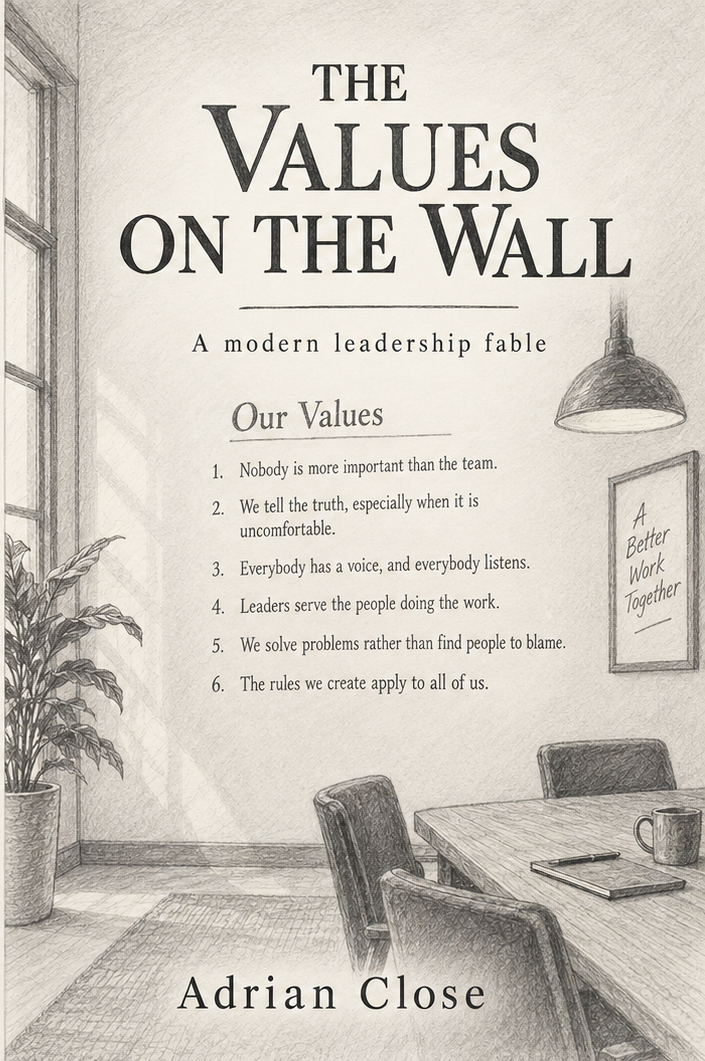
An uncomfortable leadership question
What if it is a good manager who has stopped questioning themselves?
Most poor leadership does not begin with somebody deciding to become a poor leader. It happens gradually.
A technically strong employee becomes a supervisor. A successful supervisor becomes a manager. A capable manager becomes a director. Responsibility increases. Pressure increases. More information becomes available. Decisions become more complex.
Eventually the leader begins to see what they describe as "the bigger picture."
That may be true.
But there is a dangerous leap between having more information and believing your view must therefore be the right one.
The story
Daniel Rowan helps challenge a leadership culture built around hierarchy, secrecy and empty corporate values.
He helps create something better.
Employees have a voice. Leaders serve the people doing the work. Information is shared. The rules apply to everybody. Problems are solved rather than blamed on individuals.
For a while, it works.
Then come growth, pressure, targets, difficult decisions, senior responsibility and the first perfectly reasonable exception.
One exception becomes another.
Difficult questions start sounding negative. Speaking up must become "constructive". Information is still shared, but increasingly with context. Leadership meetings get smaller. Certain people appear more "aligned" than others.
And slowly, almost imperceptibly, Daniel begins to resemble the very leader he once challenged.
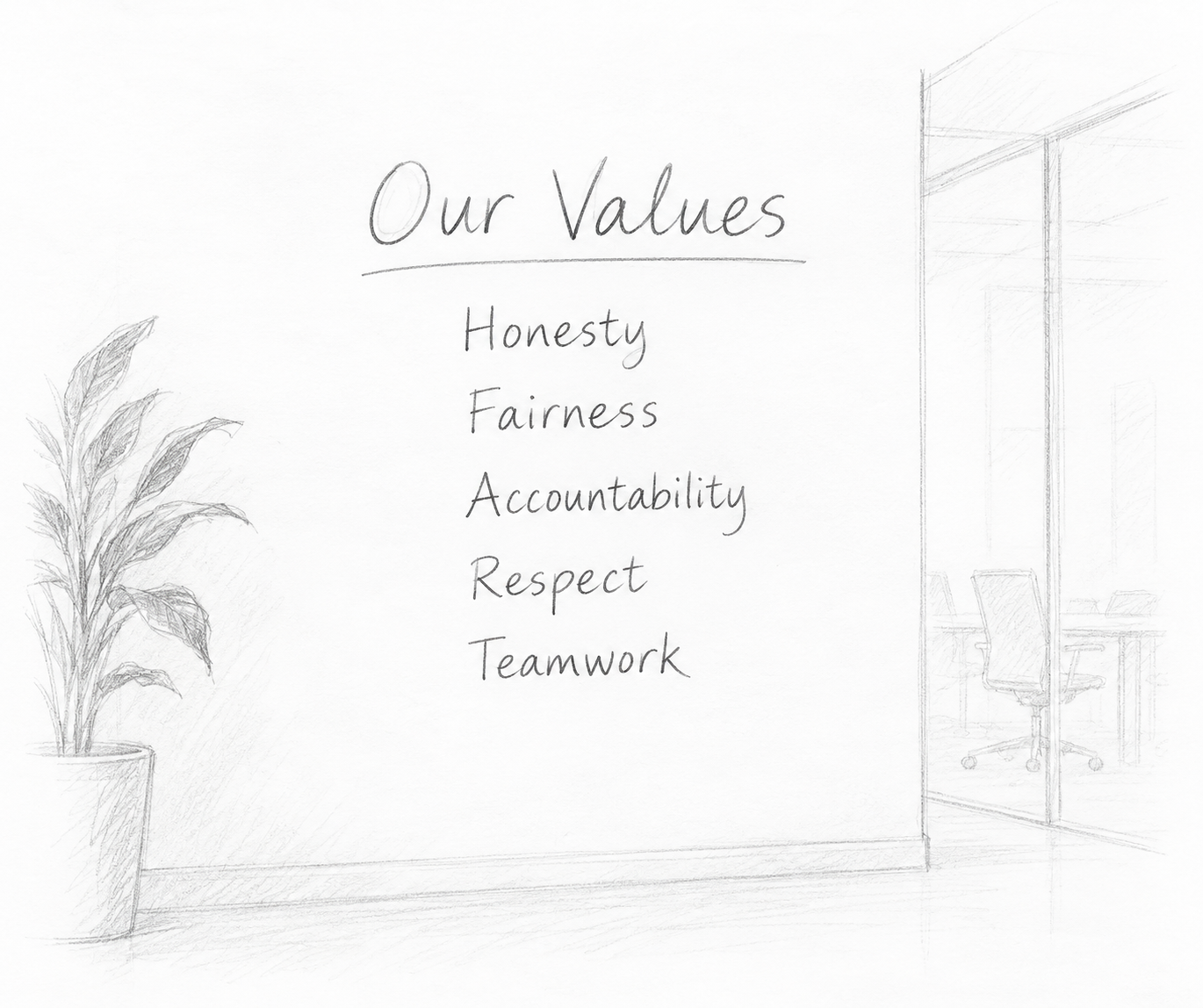
What happens when the people who challenged the old culture become the people responsible for protecting the new one?
Leadership lessons from the story
Good managers need discretion. But every exception also teaches people something about fairness, status and whose circumstances matter most.
The question is not simply whether there is a good reason for an exception. Ask what happens if that exception becomes normal.
Many organisations say they encourage employee voice. The more revealing question is who can repeatedly disagree with the senior team without slowly becoming labelled negative, difficult or "not aligned".
Integrity, transparency, people and teamwork are easy words when living them costs very little. The real test comes when a value costs money, time, convenience, status or performance.
Data can be completely accurate while still telling only part of the story. Leaders choose what gets measured, highlighted, contextualised and discussed.
A true number can still tell a false story.
Words such as positive, commercial, strategic, supportive and aligned can describe useful behaviour. They can also accidentally reward people who agree with leadership.
Employees rarely experience your leadership strategy. They experience their manager on an ordinary working day: when they make a mistake, ask a question, need feedback, disagree or need help.
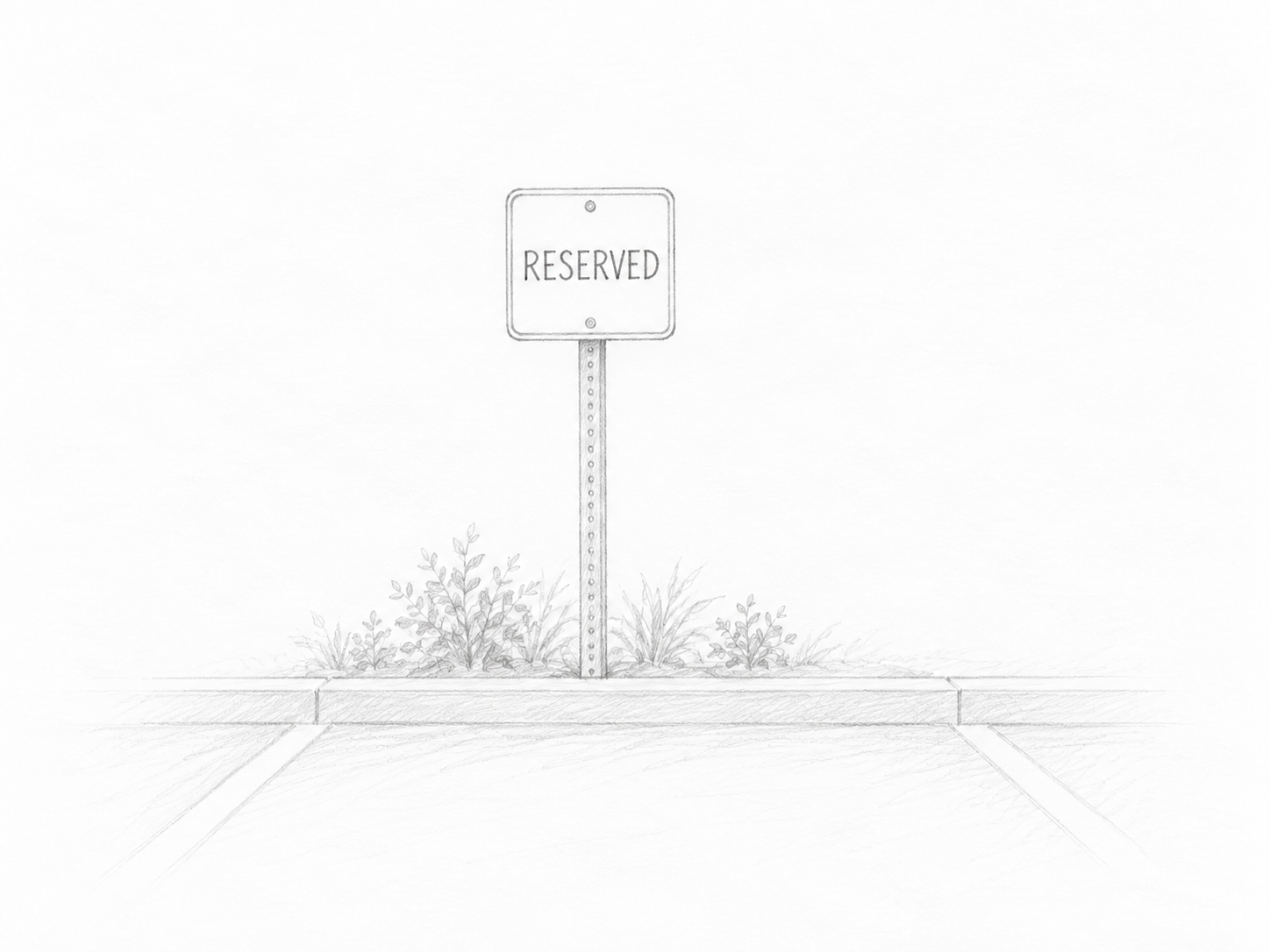
Just this once
Sometimes it begins with something as insignificant as a parking space.
A small management privilege returns for a perfectly sensible reason. Nobody intended to create a hierarchy. Nobody announced a change in organisational values.
There was simply a reason.
Then another situation had a reason.
And another.
That is one of the central ideas in The Values on the Wall: workplace culture is created not simply through policies and values statements, but through the accumulation of everyday leadership decisions.
The senior leadership bubble
Senior leaders do have access to information other people may not see: financial pressures, customer requirements, legal advice, risk, strategy, board expectations and future plans.
That information matters.
But employees also see things senior leaders may never experience.
They see how policies actually work. They see which managers people avoid. They know where the workarounds are. They hear the conversations after the meeting. They know which rules are flexible and which voices are genuinely heard.
Leadership becomes dangerous when information creates certainty rather than curiosity.
More information should create more responsibility to ask better questions, not ownership of the truth.

Try this with your leadership team
Values versus behaviour
It may have a gap between the values on the wall and the leadership people experience.
Most organisational values sound perfectly reasonable.
Integrity. Respect. Teamwork. People. Excellence. Accountability. Transparency. Customer focus.
The interesting question is not whether the words are good.
Ask what happens when living them becomes inconvenient.
Imagine that transparency will upset a major customer.
Imagine developing somebody properly will take longer than simply giving the job to your strongest employee.
Imagine accountability means challenging your highest performer.
Imagine employee voice produces an answer the board does not want to hear.
Imagine fairness means a senior leader loses a privilege.
That is when organisational values stop being branding and start becoming leadership.
Don't just read about it
If some of the situations in The Values on the Wall feel familiar, these free Ultimate Leadership Training tools will help you explore what may actually be happening inside your organisation.
How prepared are your managers to communicate, delegate, give feedback, manage performance, lead change and create an environment in which good people want to stay?
Take the Leadership Gap Scorecard →Forget being the owner, director or HR leader for two minutes. Imagine joining your own organisation as an employee. Would you want your managers managing you?
Take the Management Reality Check →Everyone agreed in the meeting. Nobody raised an objection. But was that agreement - or did the honest meeting begin after you left?
Take the Team Reality Check →Leadership problems rarely appear in the accounts under "poor management". Explore the possible hidden cost through turnover, absence, rework, productivity and senior management time.
Calculate the Potential Cost →Technical ability does not automatically create leadership capability. Explore whether your new and recently promoted managers are genuinely prepared to manage people.
Check Manager Readiness →A collection of free leadership diagnostics, management reality checks, calculators and slightly uncomfortable questions about what is really happening inside your teams.
Enter the Leadership Reality Room →For business owners, directors and HR leaders
Perhaps the question is what they repeatedly do when nobody from HR or the senior leadership team is watching.
Businesses invest heavily in values, engagement initiatives, policies, leadership frameworks and employee surveys.
Those things can matter.
But an employee's experience of your organisation is influenced enormously by the person managing them day to day.
Their manager decides whether expectations are clear.
Their manager decides whether a mistake becomes a learning conversation or a blame conversation.
Their manager influences whether speaking up feels safe.
Their manager determines whether poor performance is tackled or quietly left for the stronger employees to compensate for.
Their manager affects whether development happens or gets postponed because everybody is too busy.
Their manager is where organisational culture becomes personal.
Instead of: "Do our managers understand our values?"
Ask: "Could our employees recognise our values by watching our managers?"
Go deeper
The book tells the story.
The report looks at the wider leadership and management challenge facing organisations: accidental managers, front-line leadership, employee retention, management capability and the repeated gap between being technically capable and being prepared to lead people.
About the author
Adrian Close is Director of Learning at Ultimate Leadership Training and works with managers, supervisors, team leaders, senior leaders and organisations that want practical leadership development rather than management theory that disappears when the training day ends.
His work focuses on the everyday moments where leadership really happens: difficult conversations, delegation, accountability, communication, performance, conflict, employee voice, management confidence and leading people when the pressure is on.
The Values on the Wall brings many of those leadership questions into one fictional story and asks readers to consider not simply what good leadership looks like, but how good leadership can gradually drift.
The challenge throughout the book is deliberately personal:
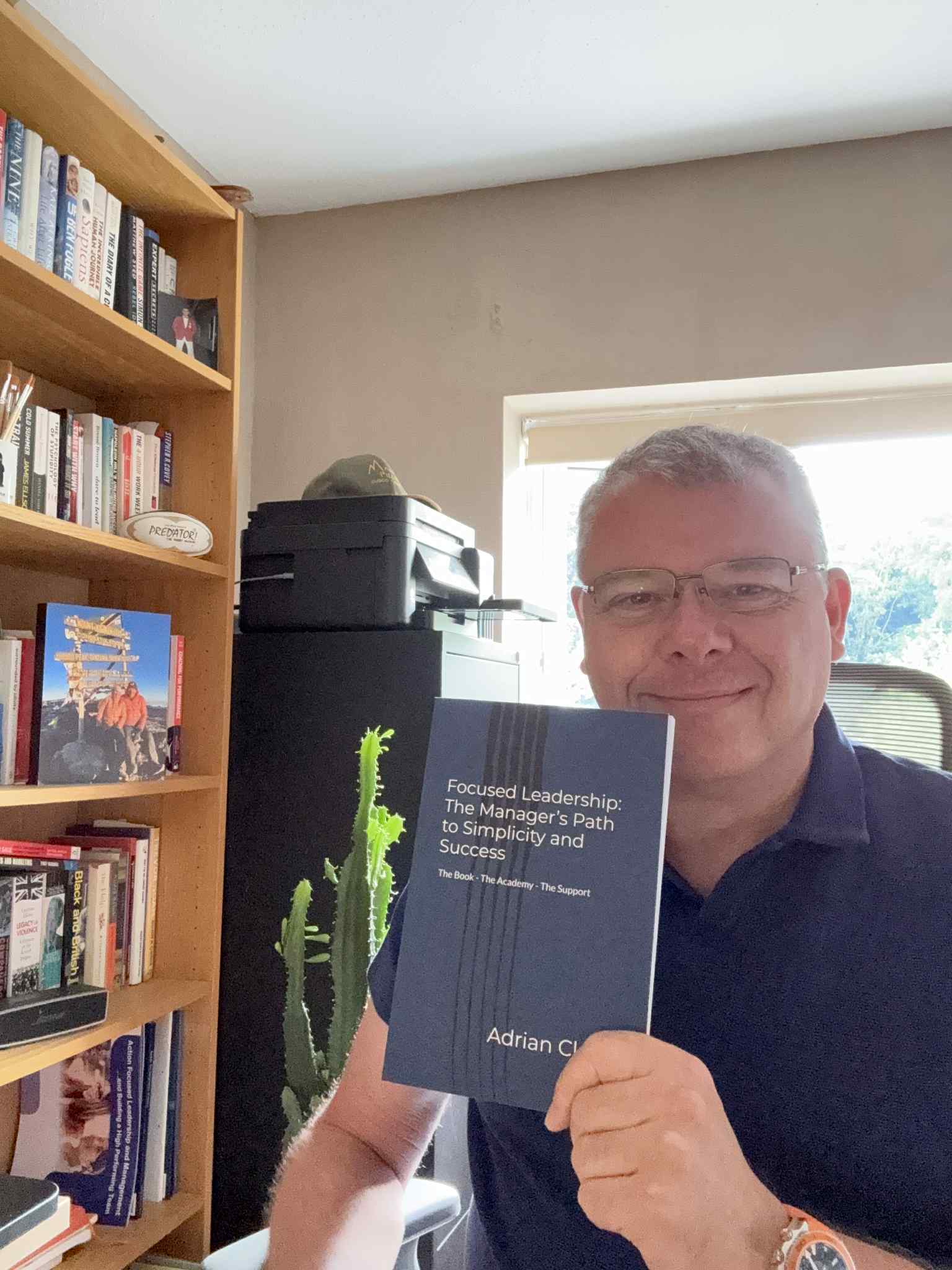
Bring the book into your organisation
The Values on the Wall can also be used as the starting point for leadership development with management teams.
The associated leadership programme explores themes including leadership drift, values under pressure, management consistency, challenge, employee voice, organisational culture, decision-making, accountability and the difference between leadership intention and employee experience.
Sessions can be used with supervisors, team leaders, managers and senior leadership teams to move the conversation away from abstract leadership theory and towards the decisions people are actually making at work.
Frequently asked questions
The Values on the Wall is a modern leadership fable about workplace culture, management behaviour, organisational values, power, employee voice and the gradual decisions that can cause good leaders to drift away from the principles they once believed in.
It is written particularly for business owners, directors, HR professionals, managers, supervisors, team leaders and anyone responsible for management development, organisational culture or employee experience.
No. It is a fictional leadership story designed to make management and workplace culture questions easier to recognise and discuss. Readers see leadership decisions unfold rather than simply being told what good leadership should look like.
Leadership drift is the gradual gap that can develop between what a leader believes they stand for and what employees actually experience. It may develop through pressure, repeated exceptions, growing responsibility, success, convenience, habits or an increasing belief that leadership knows best.
Yes. The themes can be explored through facilitated leadership training, management development days and longer leadership programmes using practical discussion, workplace scenarios, reflection and 90-day behavioural action plans.
Start with the free Leadership Gap Scorecard and Leadership Reality Room from Ultimate Leadership Training. They are designed to help owners, directors and HR leaders explore the difference between leadership intention and what people may actually experience.
One final question
Not the polished values statement.
The invisible one.
The one employees learn by watching who gets promoted, who gets challenged, whose mistakes are forgiven, whose voice matters, what leaders tolerate and what happens when the pressure is on.
That is your real leadership culture.


















Please contact us to discuss any training requirements you have, we either deliver for you or sell you the course for your trainers to deliver to your team