👉 Click Here for the Academy 👈
Contact one of the team to discuss your training goals:
Email - contact@adrianclose.com
Manufacturing Supervisor Leadership Training Case Studies
Manufacturing Supervisor Leadership Training Case Studies: What Happens When You Train People Before They Struggle
Click Here for the Supervisor Training Manufacturing Program
Many manufacturing companies promote good people for good reasons.
They are reliable.
They know the job.
They understand the process.
They work hard.
They are respected by others.
They have probably helped train new starters without ever being asked.
So when a supervisor, team leader or management role becomes available, the decision feels obvious.
Promote the person who knows the work best.
But here is the question that every HR manager, business owner, operations director and senior leader should ask before making that promotion:
Are you promoting them because they are ready to lead, or because they are good at the job they are about to leave behind?
That question matters.
Because the moment someone becomes a supervisor, everything changes.
They are no longer only responsible for their own work. They are responsible for people, standards, communication, performance, behaviour, morale, difficult conversations and the pressure that comes from both above and below.
And if they have never been trained, coached or supported, they can quickly feel exposed.
The following case studies show what can happen when organisations stop leaving leadership to chance and start developing people properly.

Manufacturing supervisor leadership training helps newly promoted operators, team leaders and managers move from doing the work to leading the work. These case studies show how practical leadership development helped supervisors improve confidence, communication, accountability, safety, time management and team performance. Adrian Close’s approach focuses on real workplace implementation, not tick-box training.
Manufacturing Supervisor Leadership Training Case Studies
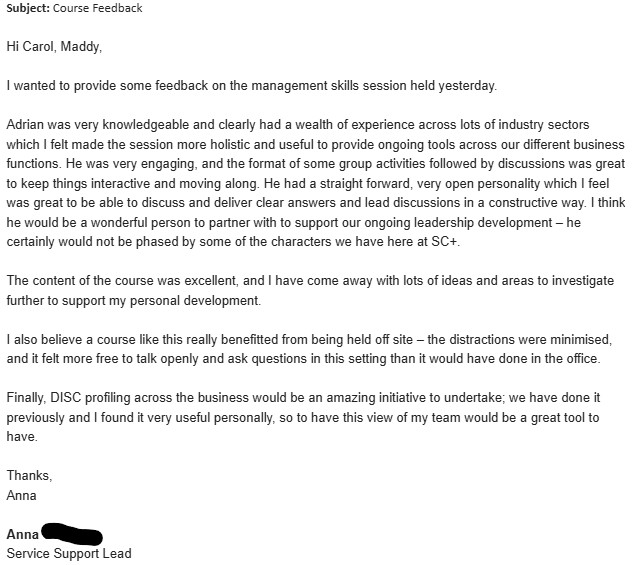
Why Manufacturing Supervisor Training Exists
The biggest issue for many manufacturing companies is not lack of technical skill.
It is the gap between technical ability and leadership ability.
A brilliant operator does not automatically know how to manage former peers.
A skilled engineer does not automatically know how to handle resistance.
A team leader who cares deeply about people may still struggle with boundaries.
A new supervisor may understand the process but avoid the conversation that really needs to happen.
This is why the Manufacturing Leadership Academy exists.
It gives newly promoted supervisors, team leaders and managers the practical leadership development, coaching and support they need to grow into the role instead of simply surviving it.
The aim is not to turn people into corporate managers who speak in jargon.
The aim is to help real people lead real teams in real workplaces.
Click Here to Book a Leadership Training Conversation
Manufacturing Supervisor Leadership Training Case Studies
Who Should Read These Case Studies?
These case studies are for:
- HR managers developing new supervisors
- Manufacturing directors building stronger leadership teams
- Operations managers who need better frontline leadership
- Business owners promoting people internally
- Production managers managing newly promoted team leaders
- Companies developing operators into supervisors
- Organisations that want practical training with measurable implementation
This is not just about training. It is about reducing the risk of promoting good people into roles they have not been prepared for.
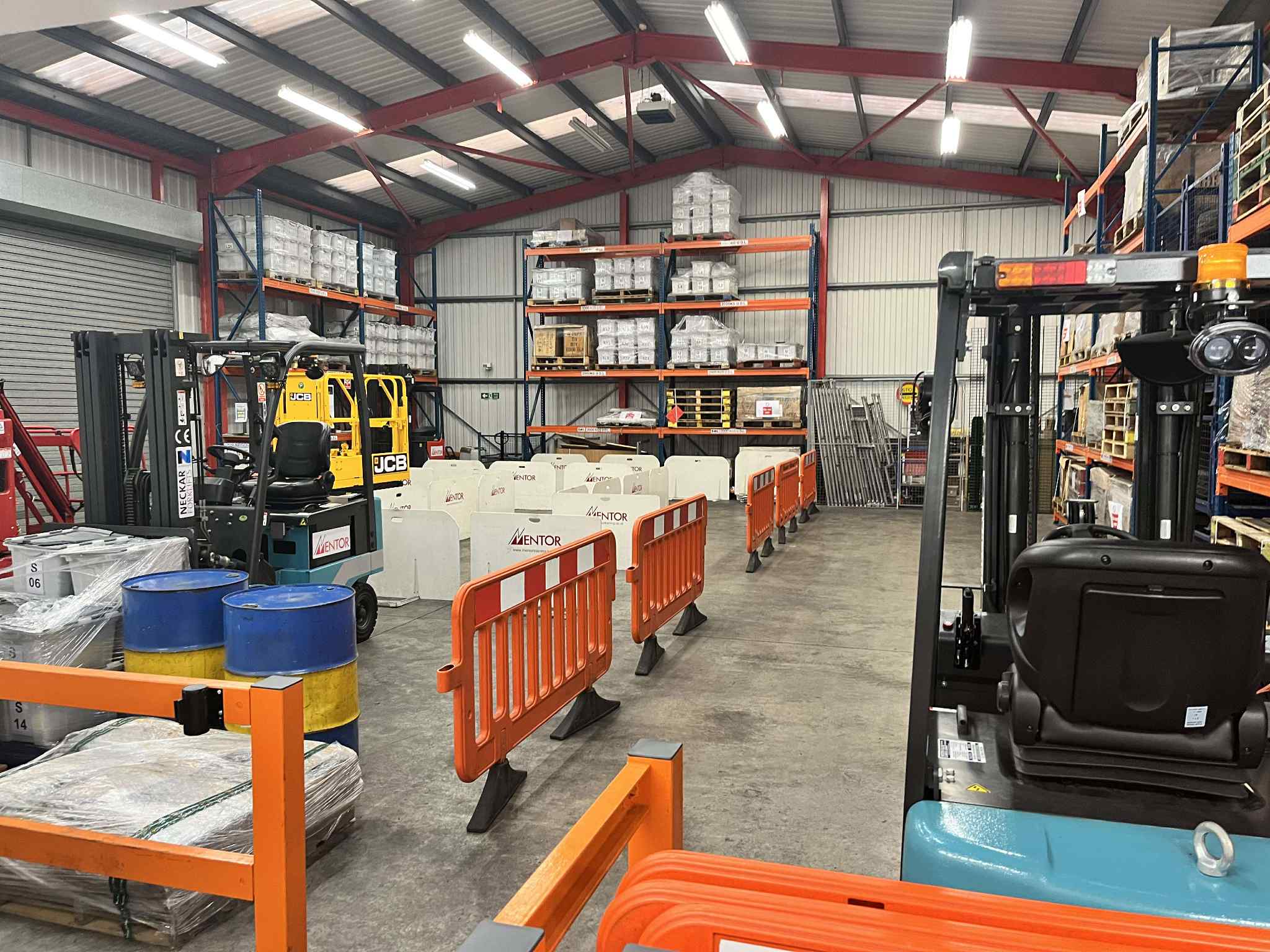
Before Leadership Training
Newly promoted supervisors may:
- Avoid difficult conversations
- Struggle to manage former peers
- Say yes to too much
- Firefight instead of lead
- Misunderstand their people responsibilities
- Rely too heavily on senior managers
- Lack confidence when communicating expectations
- Manage tasks but not people
After Practical Leadership Development
Supervisors can become more able to:
- Set clearer boundaries
- Manage time and priorities
- Communicate with confidence
- Understand their role in people processes
- Lead change gradually
- Support apprentices and experienced workers
- Improve safety mindset
- Take ownership of team performance
- Apply learning back in the workplace
Case Study 1: Carrie - From People Pleasing to Leading With Control
Carrie is a customer service team leader who cared deeply about doing a good job.
Her biggest issue was not attitude. It was not effort. It was not commitment.
Her biggest issue was that she said yes to everything.
She wanted to help everyone. She wanted to be seen as supportive. She did not want to let people down. So she kept absorbing more work, more questions, more problems and more pressure.
At first, this can look like dedication.
But over time, it becomes dangerous.
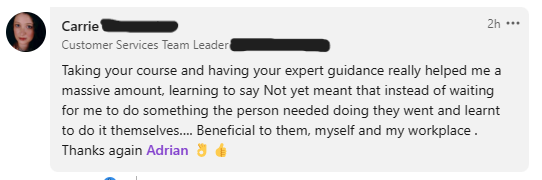
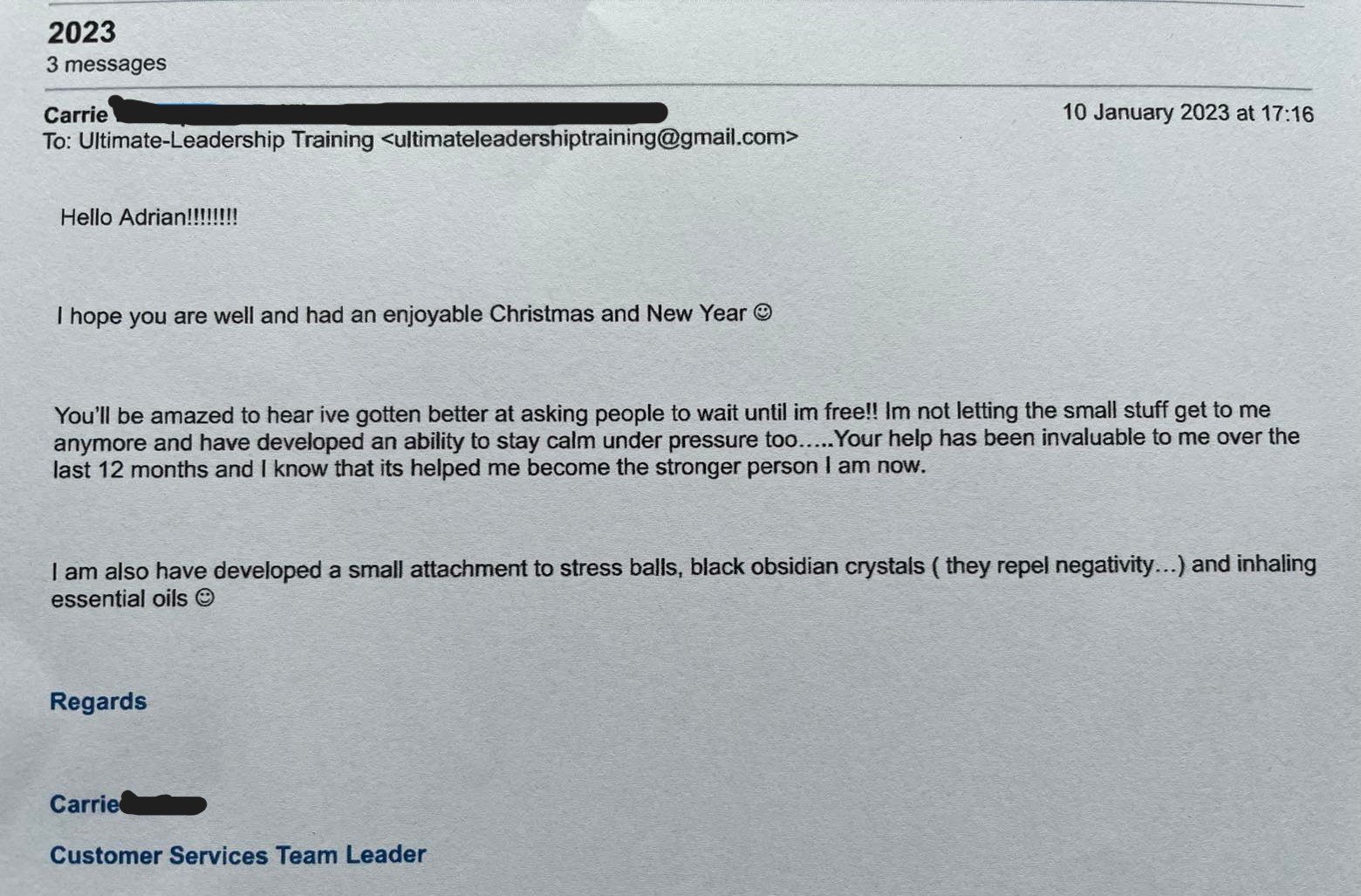
Carrie was firefighting. She was burning herself out. She had less time for her own team because she was constantly pulled into everyone else’s priorities. She also knew there was a difficult conversation she needed to have with one of her team members, but she did not have the time, headspace or confidence to deal with it properly.
Through four to five online learning and support sessions, Carrie started to challenge how she was working.
She learned that leadership is not about saying yes to everything.
Leadership is about knowing where your time has the greatest impact.
By changing how she managed her boundaries, priorities and responsibilities, Carrie saved 16 hours per week.
That is two full working days.
With that time back, she could focus on her own team, manage difficult customer enquiries more efficiently and have the conversation she had been avoiding.
The lesson for manufacturing supervisors is clear:
If your team leaders are constantly firefighting, the answer is not to ask them to work harder. The answer is to help them lead differently.
Common Problems This Training Helps Solve
Manufacturing companies often contact Adrian when they are seeing issues such as:
- Operators promoted without leadership training
- Supervisors avoiding difficult conversations
- Team leaders saying yes to everything
- Poor communication between shifts
- Inconsistent standards across teams
- Supervisors unsure how to manage former peers
- Managers relying on instinct instead of structure
- Apprentices and experienced workers needing different support
- Safety messages not landing properly
- Supervisors not understanding their role in people processes
- Senior managers constantly stepping in to solve frontline issues
Click Here to Discuss Supervisor Training
Manufacturing Supervisor Leadership Training Case Studies
Click Here to Explore the Manufacturing Leadership Academy
Manufacturing Supervisor Leadership Training Case Studies
Case Study 2: AET Engineering, Sheffield - Helping Supervisors Understand Their Real Role
AET Engineering in Sheffield had a very male-dominated workforce with many people who had been doing things the same way for a long time.
The company wanted to support its supervisor team to begin implementing change slowly and sensibly.
This was not about forcing a new culture overnight.
It was about helping supervisors understand that they had a bigger role to play in supporting people at every level, from long-serving employees to new apprentices.
Before the programme, the supervisors had not received this type of leadership and management training.
They knew the work. They understood the environment. But they needed a clearer understanding of how supervision connects to communication, standards, support, accountability and people processes.
The programme ran for 12 months and focused on practical implementation.
The aim was to help supervisors take small, useful actions rather than overwhelm them with theory.
One of the standout comments was:
“I didn’t realise how much of the HR processes we should get involved in.”
That was a powerful shift.
It showed that supervisors were beginning to understand they are not just there to keep work moving. They are often the first people who can spot issues, support conversations, reinforce standards and help prevent problems from becoming bigger.
The lesson for manufacturing companies is this:
Supervisors do not need to become HR managers, but they do need to understand their leadership responsibility before issues escalate.
Case Study 3: Slater Gordon Solutions Motor - Creating Consistency Across Managers and Team Leaders
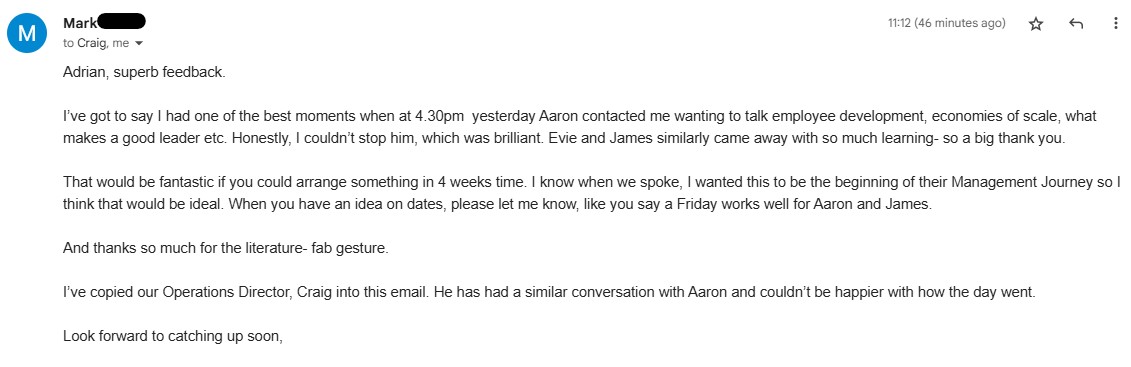
Slater Gordon Solutions Motor had grown and changed over the years, including through mergers and regular recruitment. The business wanted to develop team members into supervisors, team leaders and managers, but their people were at different levels of knowledge and expertise. The challenge was to create a more focused and joined-up approach to leadership development.
The programme needed to recognise the skills some managers already had, develop new ones, upskill new managers, remove bad habits, build confidence and create a consistent standard of best practice.
This is a challenge many manufacturing companies will recognise.
As a business grows, promotes people and recruits from different backgrounds, leadership standards can become inconsistent.
One supervisor communicates well.
Another avoids conversations.
One manager motivates the team.
Another struggles with change.
One team leader understands the company vision.
Another focuses only on daily tasks.
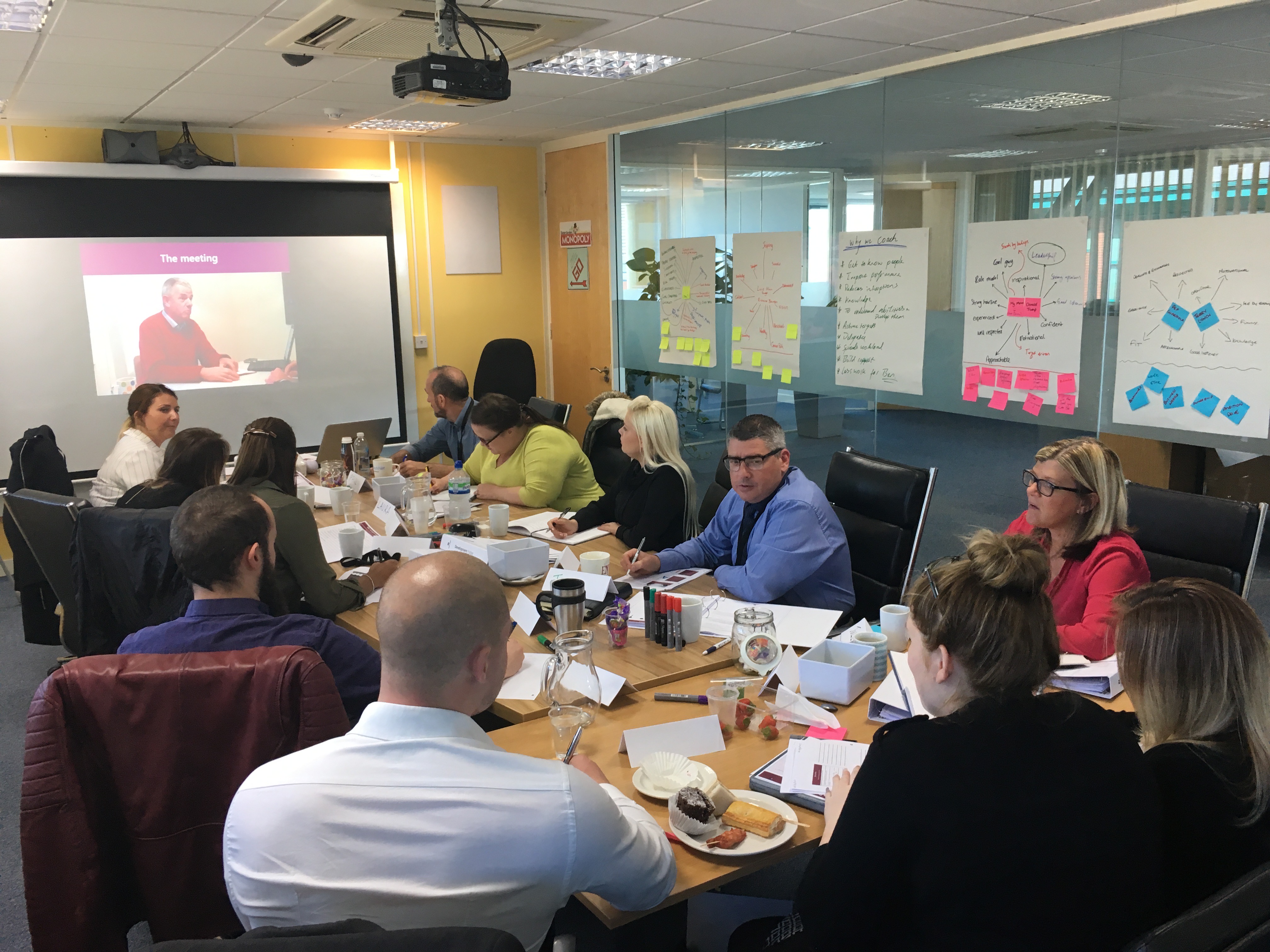
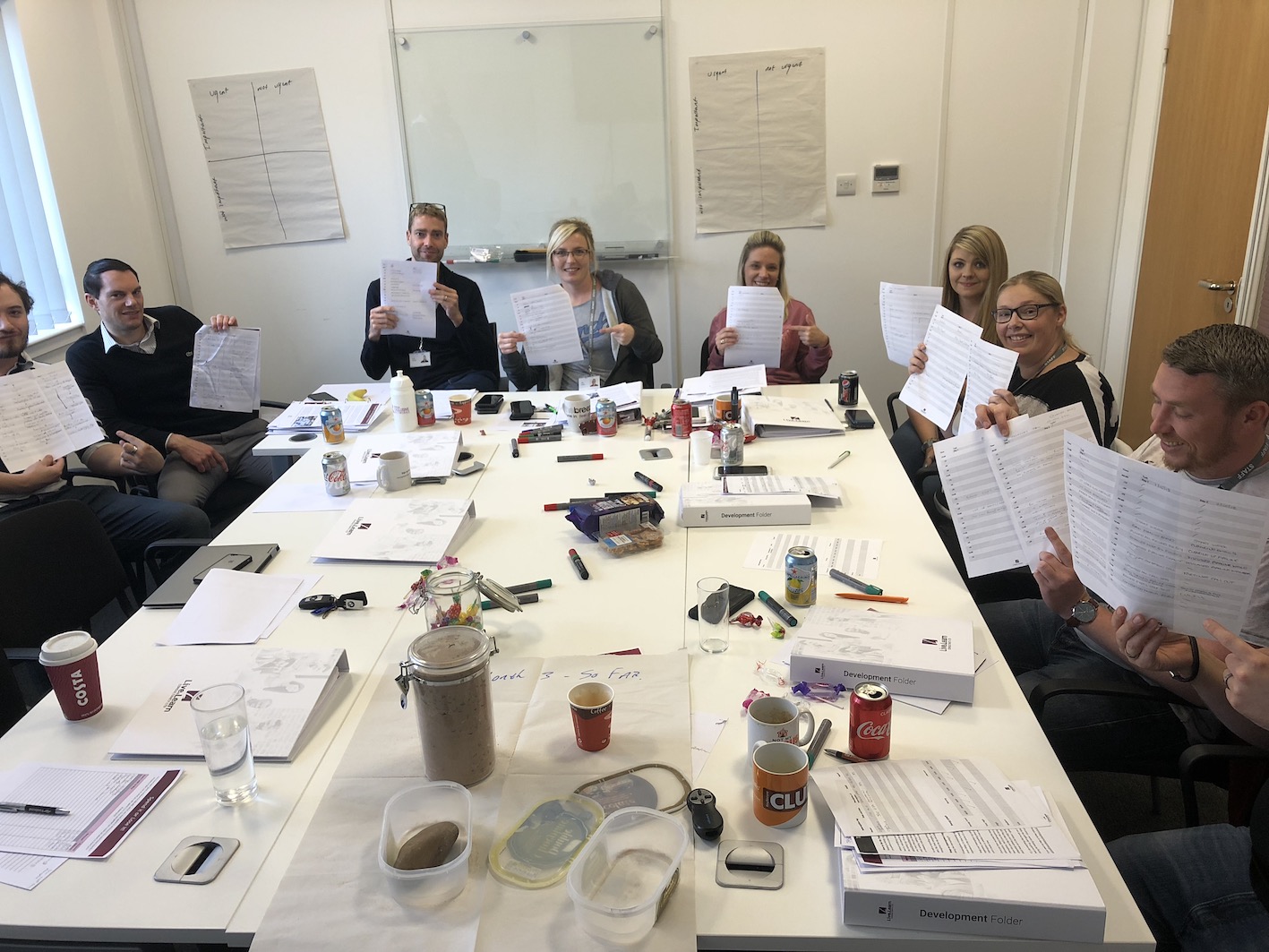
The solution was a 12-month action-focused leadership and management programme with the company’s core values at the heart of it. The programme ran one day per month, with managers attending classroom-based sessions. Each session ended with actionable goals, which were reviewed at the start of the following session and again at the end of the programme.
The results were extremely positive.
One manager saved herself 2 hours per day and was promoted halfway through the programme as a direct result of her work. Feedback included comments about understanding the difference between leading and managing, learning how to motivate a team, inspiring people, communicating the company vision, controlling emotions and having a process for managing change and planning. Further training sessions were booked as a result.
The lesson is clear:
When leadership development is structured, action-focused and followed through, people do not just learn. They change how they work.
Click Here to Start Developing Your Supervisors
Manufacturing Supervisor Leadership Training Case Studies
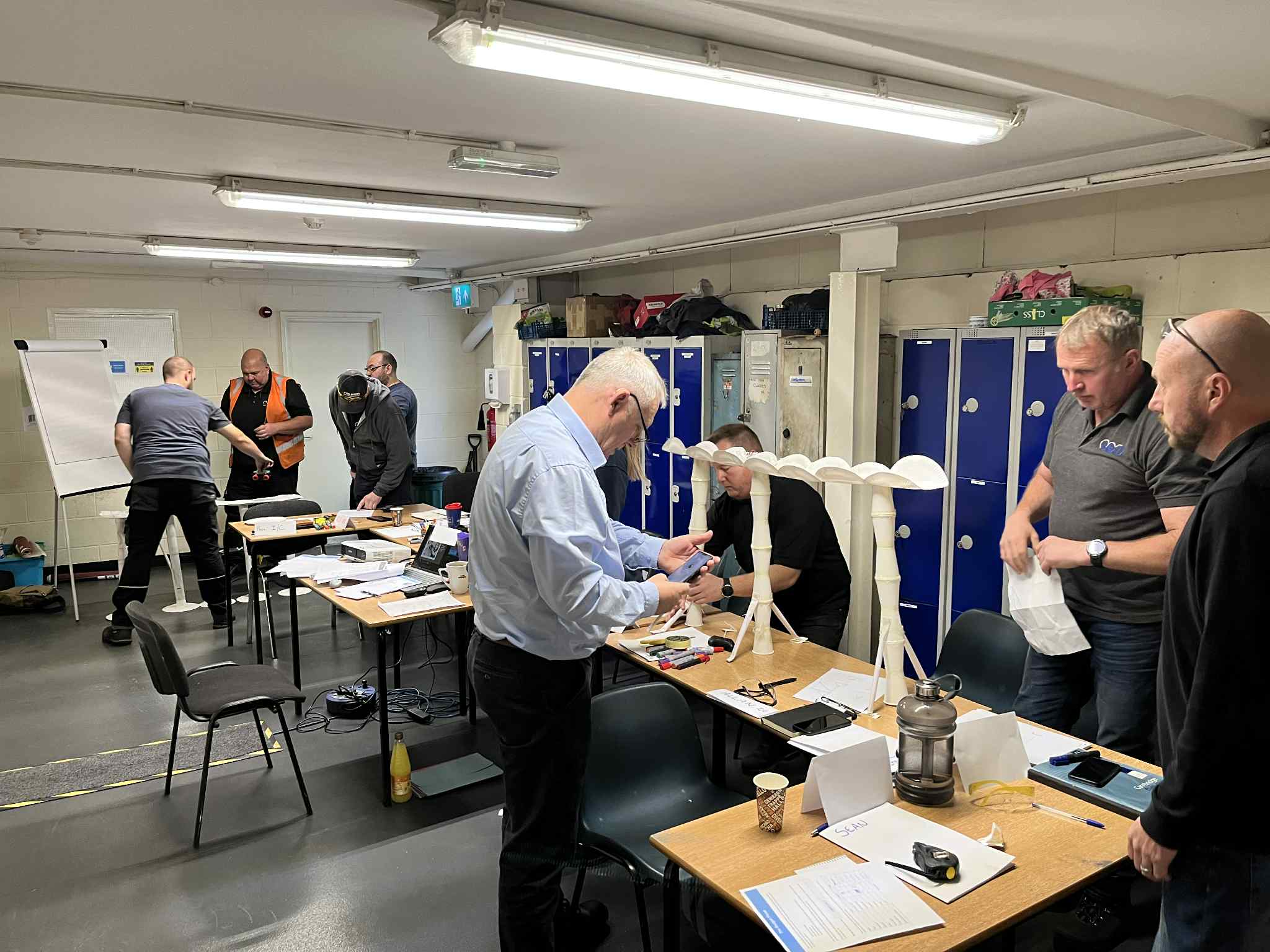
Case Study 4: Civil Engineers, Kent - Creating a Safety Mindset Shift
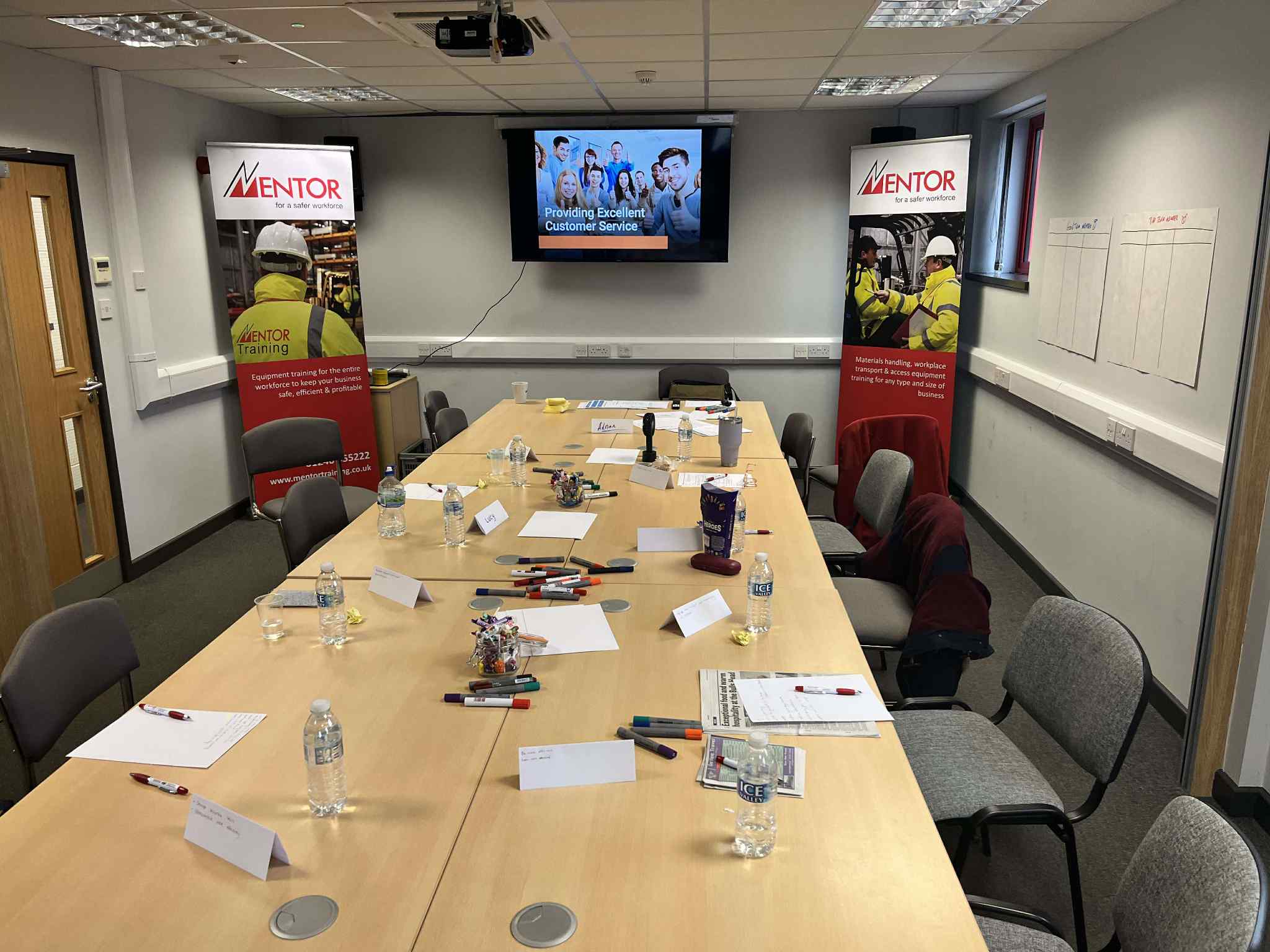
A civil engineering business based in Kent wanted a mindset shift across a team of around 100 people.
The focus was safety.
The key message was:
100% Strike Free Digging.
The aim was to help the team avoid striking underground appliances, where one mistake could create serious danger, cost, delay and reputational damage.
This was a potentially difficult group.
In practical work environments, people can sometimes feel they already know what they are doing. They may be sceptical about training. They may resist being told something they believe they already understand.
So the session had to be more than instruction.
It had to challenge thinking.
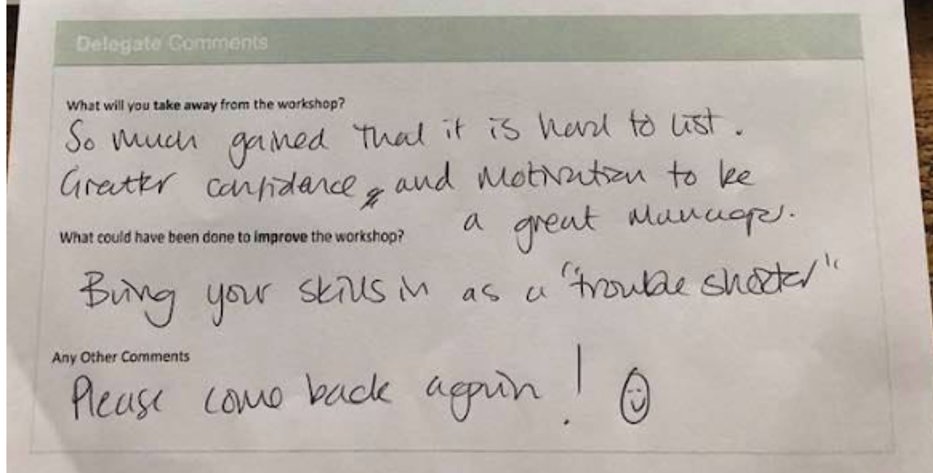
The course helped people reflect on responsibility, awareness, decision-making and the real consequences of everyday choices.
Everyone took something away, and safety levels improved.
The lesson for manufacturing businesses is powerful:
Training works best when it changes how people think, not just what they know.
In manufacturing, this applies to safety, quality, standards, handovers, communication and accountability.
People do not only need rules.
They need ownership.
Click Here to Book a Manufacturing Leadership Call
Manufacturing Supervisor Leadership Training Case Studies
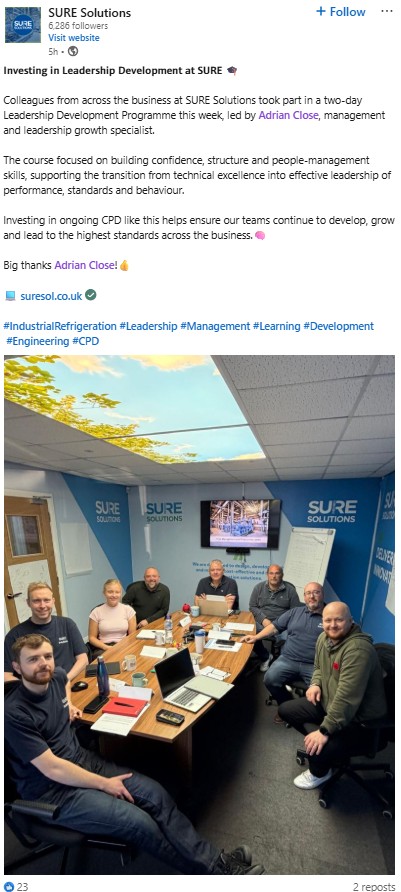
Case Study 5: Sure Solutions, Wirral - From the Tools to Supervising Teams
Sure Solutions, based in the Wirral, had team members who had come off the tools and moved into supervisory roles across sales, service, design and installation.
This is one of the most common leadership challenges in practical businesses.
Someone is excellent at doing the work, so they are asked to supervise the work.
But doing and leading are not the same.
The biggest issue was helping people shift their mindset.
They had to move from being the person who completes the job to the person who supports others to complete the job well.
They had to communicate differently, take ownership differently and understand how their behaviour affected the people around them.
Before the training, they had not received this type of leadership and management development.
The group were excellent. They engaged, implemented lots and left the training motivated to make a difference.
That matters.
Because the best training does not simply give people information.
It gives them belief.
It helps them see that leadership is not about becoming someone else. It is about becoming more intentional, more confident and more effective in the role they already have.
The lesson is simple:
When people come off the tools, they need help to stop thinking only like doers and start thinking like leaders.
These case studies show that supervisor training is most effective when it is practical, action-focused and linked to real workplace challenges. Adrian Close helps manufacturing companies develop newly promoted supervisors, team leaders and managers by improving confidence, communication, accountability, emotional control, people management and implementation. The strongest results come when training is not treated as a one-off event, but as support that helps people change how they lead.
Manufacturing Supervisor Leadership Training Case Studies
Programme Overview: What These Case Studies Prove
These case studies all point to the same truth.
People do not fail in leadership because they lack potential.
They often struggle because the business promoted them before developing them.
The Manufacturing Leadership Academy helps solve this by supporting supervisors, managers and team leaders with practical leadership development that can be applied straight away.
The academy helps learners develop:
- Confidence in the leadership role
- Better communication
- Stronger boundaries
- Time and priority control
- Difficult conversation skills
- Coaching and feedback skills
- Emotional control
- Change management
- Accountability
- Team motivation
- Clearer understanding of people processes
- Practical implementation between sessions
This is not training for the sake of training.
It is development designed to change behaviour.
Manufacturing Training Evidence Table
| Case Study | Main Issue | Training Approach | Result |
|---|---|---|---|
| Carrie | People pleasing, overcommitting and firefighting | 4–5 online learning and support sessions | Saved 16 hours per week and regained time to lead her team |
| AET Engineering, Sheffield | Traditional workforce, supervisors unsure of their wider people role | 1-month supervisor development programme | Supervisors began implementing change and better understood HR process involvement |
| Slater Gordon Solutions Motor | Managers and team leaders at different levels of knowledge and confidence | 12-month action-focused leadership and management programme | One manager saved 2 hours per day and was promoted during the programme |
| Civil Engineers, Kent | Safety mindset needed across a 100-strong team | Mindset and safety-focused training | Improved safety awareness around 100% Strike Free Digging |
| Sure Solutions, Wirral | Team members moving from the tools into supervisory roles | Practical leadership and supervisor training | Learners left motivated and implemented new leadership ideas |
Click Here to Talk About Your Team Leaders
Manufacturing Supervisor Leadership Training Case Studies
Results in Numbers
Across these case studies, the impact included:
- 16 hours per week saved for Carrie
- 4 to 5 online sessions helping Carrie regain control
- 12 month of supervisor development with AET Engineering
- 12 months of action-focused leadership development with Slater Gordon Solutions Motor
- 2 hours per day saved by one manager during the Slater Gordon programme
- 1 promotion halfway through the programme
- 100 people involved in the safety mindset programme in Kent
- Further training booked after positive HR feedback
- Improved confidence, communication, emotional control and change planning
These are the kinds of outcomes that matter because they affect time, performance, confidence, safety, retention and leadership consistency.
What These Case Studies Prove
These case studies show that newly promoted supervisors and managers often struggle because they have been promoted for technical ability, not leadership readiness.
Across the examples, the common outcomes include:
- More confident supervisors
- Better time management
- Improved communication
- Stronger accountability
- Better understanding of people processes
- Improved safety awareness
- Clearer leadership standards
- More practical implementation after training
Who This Is For
The Manufacturing Leadership Academy is ideal for companies that are promoting people into leadership and want them to succeed.
It is for:
- HR managers developing supervisors
- Business owners growing their leadership team
- Operations directors who need stronger frontline leaders
- Manufacturing supervisors
- Team leaders
- Shift leaders
- Cell leaders
- Line leaders
- People coming off the tools
- New managers
- Experienced employees who have had no formal training
It is especially useful when people are technically strong but have never been shown how to lead.
Who This Is Not For
This is not for companies that want a tick-box course.
It is not for businesses that believe people should simply “get on with it” once promoted.
It is not for leaders who want better performance but do not want to invest in the people responsible for delivering it.
And it is not for supervisors who want the title without the responsibility of growth.
This is for businesses that understand one simple truth:
If leadership matters, leadership training cannot be optional.
Click Here to Discuss Training for Newly Promoted Supervisors
Manufacturing Supervisor Leadership Training Case Studies
FAQs - Manufacturing Supervisor Leadership Training Case Studies
Why do newly promoted manufacturing supervisors struggle?
Why do newly promoted manufacturing supervisors struggle?
They often struggle because they are promoted for technical ability but not trained in people management, communication, confidence, accountability or difficult conversations.
Can leadership training help people who have come off the tools?
Can leadership training help people who have come off the tools?
Yes. It helps them move from doing the work themselves to leading, supporting and developing others.
Is online support effective?
Is online support effective?
Yes. Carrie’s case shows how online learning and support can create practical change, including saving 16 hours per week.
Should supervisors understand HR processes?
Should supervisors understand HR processes?
Yes. They do not need to replace HR, but they do need to understand their role in early conversations, standards, support and escalation.
Can training improve safety?
Can training improve safety?
Yes. Safety improves when people understand responsibility and mindset, not just rules.
How long should supervisor training last?
How long should supervisor training last?
It depends on the business. Some teams need a focused one-month programme, while others benefit from 12 months of structured development and support.
What makes this different from standard training?
What makes this different from standard training?
The focus is practical implementation. Learners are encouraged to apply what they learn, reflect on progress and build confidence over time.
Click Here to Build Stronger Frontline Leaders
Manufacturing Supervisor Leadership Training Case Studies
Stop Hoping People Will Cope
Manufacturing businesses cannot afford to leave leadership to chance.
Costs are rising. Teams are under pressure. Skilled people are hard to keep. Standards matter. Customers expect more. Safety cannot be compromised.
In that environment, your supervisors and team leaders are too important to be left unsupported.
The future belongs to companies that develop leaders before they are overwhelmed.
- Not after the complaints start
- Not after the team loses confidence
- Not after the supervisor burns out
Before.
That is the challenge.
Do not just promote good people.
Prepare them.
About Adrian - Director of Learning at Ultimate Leadership Training
The academy is led by Adrian, a multi-award winning manager, business owner, leadership, management and business growth specialist.
Adrian brings real-world experience, not just theory.
He understands the pressure leaders face because he has lived it. He knows what it means to manage people, make decisions, carry responsibility and deliver results.
That experience is what makes the academy different.
Learners are not simply watching generic training content. They are supported by someone who understands leadership in practice and can help them think through real situations.
Adrian’s role is to challenge, guide, coach and encourage learners as they grow.
For manufacturing companies, this means your future supervisors are supported by someone who understands both people and performance.
That combination matters.
Because leadership is not just about knowing what to do.
It is about having the confidence, judgement and support to do it when it counts.
Adrian has worked with organisations including:
- SCHUNK Engineering
- Advanced Engineering Techniques LTD
- B Braun
- Grant UK
- ECO Vision
- Cokebusters UK and USA
- Mentor Training
- Catch UK
- Stanley Black and Decker
His work focuses on practical leadership capability - not theory.
He understands shift pressure, production targets, safety audits and the realities of manufacturing life.
This programme reflects real plant-floor experience, not classroom abstraction.

Call to Action - Manufacturing Supervisor Leadership Training Case Studies
If you are promoting people into supervisory, management or leadership roles, do not leave them to work it out alone.
Give them the training, coaching and support they need to succeed.
Contact Adrian today to discuss the Manufacturing Leadership Academy and how it can help your supervisors, managers and team leaders lead with confidence.
Blogs - Manufacturing Leadership Academy
1. How to Prepare Operators for Leadership Roles
Many manufacturing companies promote their best operators and hope they will naturally become strong leaders. This blog explains why that approach often fails, and how the Manufacturing Frontline Leadership Academy helps operators build the confidence, communication skills and leadership habits they need before stepping into supervisor roles.
2. Why Frontline Supervisors Fail And How to Fix It
Frontline supervisors rarely fail because they lack ability. More often, they fail because they were never properly trained or supported. This blog challenges manufacturers to rethink supervisor development and shows how 12 months of online leadership training and monthly coaching can help new and existing supervisors succeed.
3. Reducing Supervisor Turnover in Manufacturing
Supervisor turnover damages team stability, performance and confidence across the factory floor. This blog explores why supervisors leave, the hidden cost of replacing them, and how ongoing leadership development can help manufacturing companies retain and grow stronger frontline leaders.
4. The Player-to-Coach Transition in Industrial Settings
Moving from being one of the team to leading the team is one of the hardest shifts in manufacturing leadership. This blog looks at the emotional and practical challenges of the player-to-coach transition, and how structured training helps new supervisors lead former peers with confidence and respect.
5. Coaching Skills for Manufacturing Team Leads
Manufacturing team leads often become the answer to every problem, leaving teams dependent and supervisors overwhelmed. This blog explains how coaching skills help team leads build ownership, confidence and problem-solving ability across their teams, while reducing pressure on themselves.
Manufacturing Supervisor Leadership Training Case Studies
As well as lots of smaller businesses and organisations, below are examples of some larger organisations who have received training from our director of learning at Ultimate Leadership Training:


















Please contact us to discuss any training requirements you have, we either deliver for you or sell you the course for your trainers to deliver to your team
Best Fit
This training is best suited to manufacturing companies that:
- Promote operators into supervisor roles
- Want to develop team leaders before problems appear
- Need more confident frontline managers
- Want practical implementation, not theory
- Are trying to improve consistency across teams
- Want supervisors to understand their people responsibilities
- Want leadership training that connects to real workplace issues
Not Best Fit
This training is not best suited to companies that:
- Only want a tick-box certificate
- Do not want learners to change behaviour
- Believe supervisors should simply “work it out”
- Are unwilling to give people time to apply what they learn
- Want generic theory with no practical implementation
Why These Case Studies Matter for Manufacturing Companies
Manufacturing companies often promote reliable, technically strong people into supervisory roles before they have been trained to lead. These case studies show what can happen when supervisors, team leaders and managers receive practical leadership development instead of being left to work it out alone.
The outcomes include time saved, improved confidence, better communication, stronger understanding of people processes, improved safety awareness, clearer standards and more motivated supervisors.
The lesson is simple: Do not wait until a newly promoted supervisor is overwhelmed before investing in training. Prepare them before the pressure damages their confidence, their team or your business.
Thanks for visiting our Manufacturing Supervisor Leadership Training Case Studies page, here is a link to our Homepage
Frontline Supervisor Training Manufacturing - Manufacturing Leadership Academy - Leadership Training for Engineering Companies – About Adrian – Case Studies Manufacturing - Online Leadership and management training academy - Manufacturing Leadership Training - New Manager Training - Leadership Coaching for Managers - Contact Adrian / Book a Call
Manufacturing Supervisor Leadership Training Case Studies, discover manufacturing supervisor leadership training case studies showing how Adrian helped team leaders and managers improve confidence, communication and performance.
Manufacturing Supervisor Leadership Training Case Studies